

Custom AI agent development
AI agents that work as employees. You own them.
A receptionist that answers every call. A sales agent that follows up in seconds. A bookkeeper's assistant that reads every invoice. I build AI agents on your systems, with your data and your rules, and hand you the keys. No seat fees, no platform, no lock-in.
AI Makers is Mark Austen's custom AI software studio (AI Makers LLC). I build AI employees for 10–500 person companies worldwide, and a single-role employee is live in 2 to 6 weeks.
An AI agent you own, not one you rent.
Every AI agent platform sells you a seat. The agent lives inside their product, on their terms, at a monthly price that never ends. I build the employee inside your business instead: your CRM, your inbox, your calendar, your ERP. It runs on your server or my managed cloud, and when it ships, the code is yours.
Does one job, properly
Scoped to a workflow you already run, with a clear brief, escalation rules and a person to hand off to.
Works inside your tools
Reads and writes your real systems. No copy-paste layer, no shared chatbot with a form in front of it.
Priced once
A written quote, then it is yours. No per-seat fee, no per-message fee, no renewal.
Live in weeks
A single-role employee is live in 2 to 6 weeks, with weekly demos while it is built.
Six AI agents most 10 to 500 person companies ask for.
Each one is a real build I have scoped or shipped. Pick the role, I connect it to what you already use, and you get a written quote after a short scoping chat.
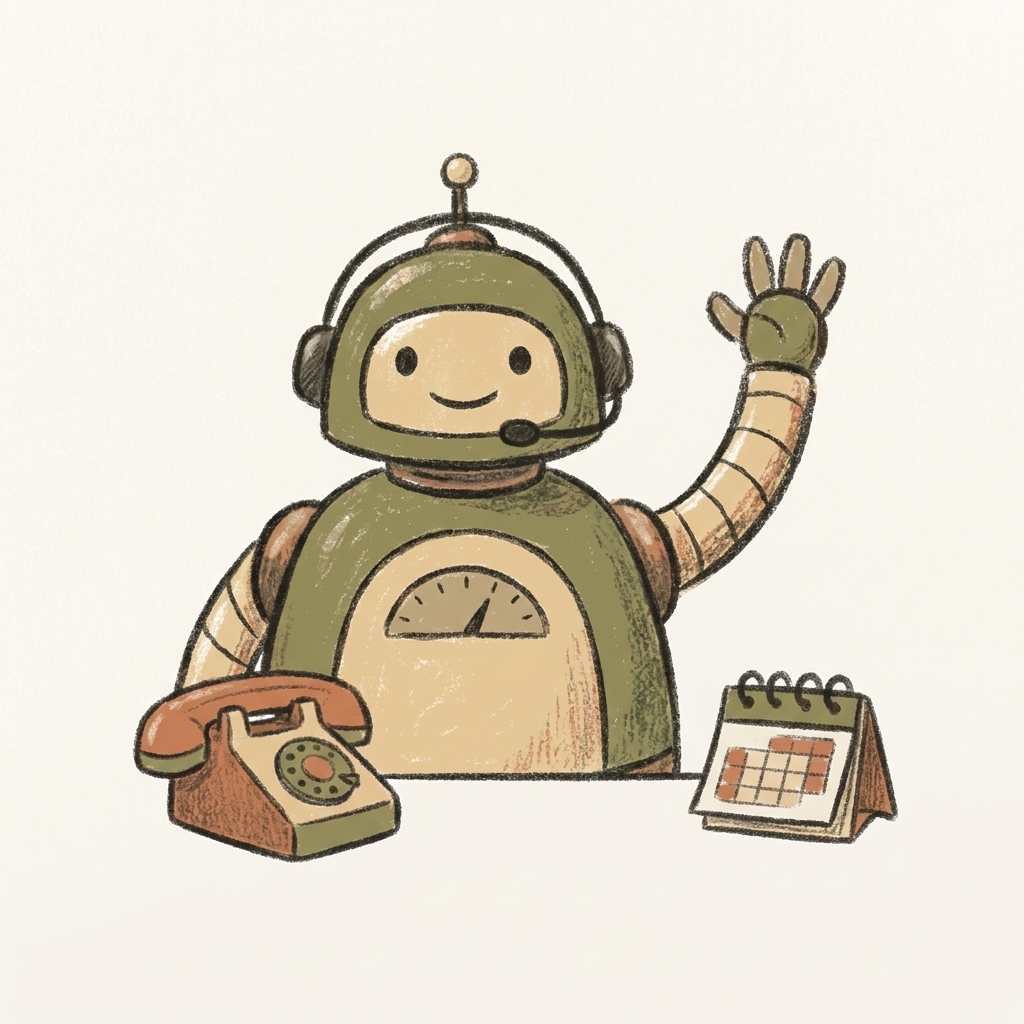
Receptionist
Answers every call and web enquiry in your brand voice, qualifies the job, books it into the calendar, and follows up the ones that hung up.
- Plugs into
- Phone, WhatsApp, website form, Google or Outlook calendar
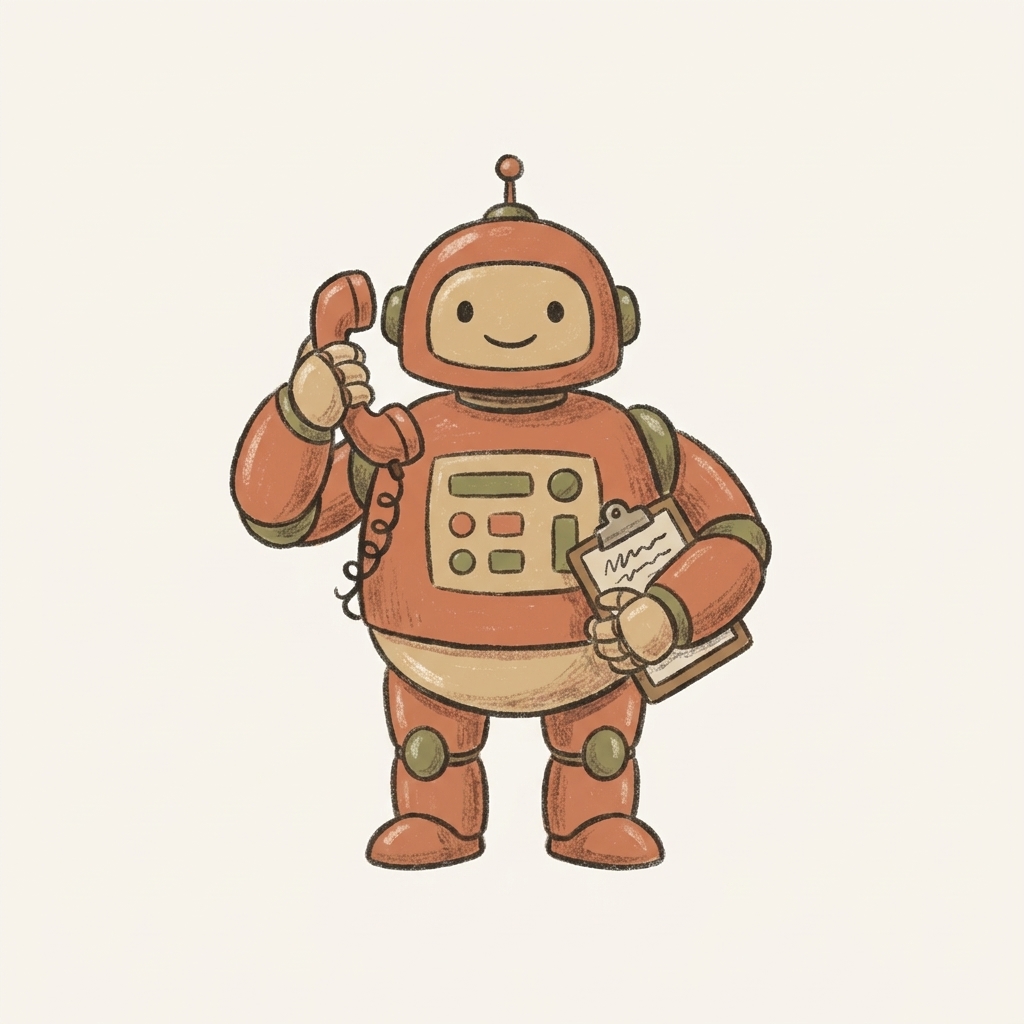
Sales follow-up
Replies to inbound leads in seconds, asks the questions you would ask, books the meeting, and writes the summary into the CRM. Chases the quotes that went quiet.
- Plugs into
- HubSpot, Pipedrive or Salesforce, email, WhatsApp, calendar
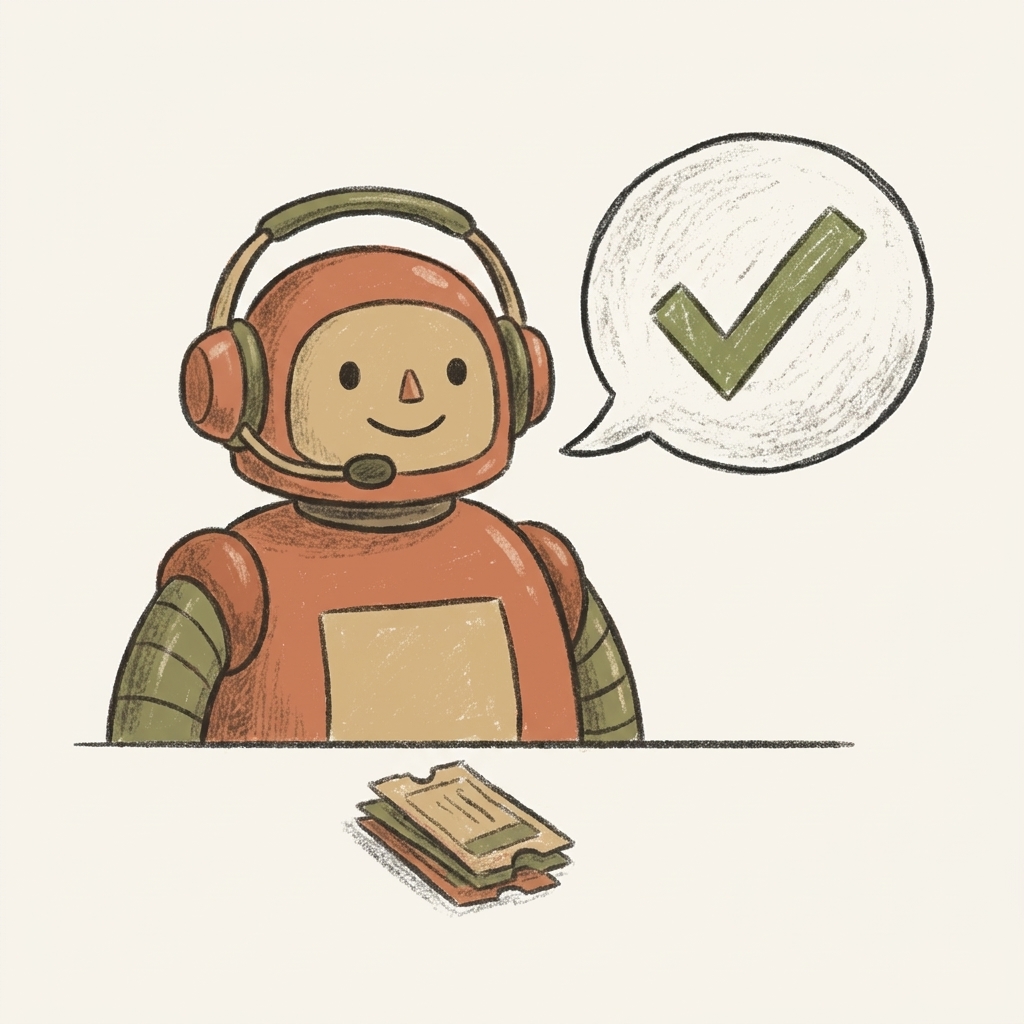
Support desk
Resolves the routine tickets from your own documentation and order data, and hands the rest to a person with the context already gathered.
- Plugs into
- Helpdesk, email, web chat, order system

Bookkeeper's assistant
Reads invoices, receipts and statements, codes them, matches them to payments, and flags what does not reconcile. The month-end pile, handled daily.
- Plugs into
- Xero, QuickBooks or Exact, bank feeds, email, Drive
Operations coordinator
Watches the work moving through your systems, chases the missing information, updates the right records, and tells the right person when something slips.
- Plugs into
- ERP or project tool, Slack or Teams, email, Sheets

Research and reporting
Pulls the numbers, writes the weekly report, builds the prospect list, summarises the documents nobody has time to read. Delivered to the channel you already look at.
- Plugs into
- Your databases, Sheets, Slack or email, the web
Need a role that is not here? Most AI agents are a mix of two of these. Describe the job and I will scope it. The people who hired one first wrote up how it went in how I set AI employees up.
What makes an AI agent custom.
Off-the-shelf bots answer from a script. A custom AI agent is built around your business: it reads your data, works inside your CRM, inbox, and back office, and follows your rules for what it may decide alone and what goes to a human. That difference is the whole value. An agent that cannot touch your real systems is a demo. What that wiring involves per tool, and the four ways it breaks in month one, is set out in connecting an AI assistant to your business tools.
Custom AI agent development here is a full service, not a platform subscription. You describe the workflow. I scope it in a short chat, quote a fixed price and hand over an agent you own outright, with code, prompts and integrations.
- Scoping and design. I map the workflow, define what the agent decides alone, and pick the right platform for it.
- Build and integrations. The agent is wired into your actual systems: CRM, ERP, email, WhatsApp, databases, internal tools.
- Evaluation and guardrails. Test suites, human-in-the-loop gates, and audit logs before anything touches production.
- Deployment and handover. Hosted where you want it, documented, and owned by you. Optional managed plan after launch.
Wondering what this costs? It is a fixed price, quoted after a short scoping chat with me; how pricing works explains what goes into the quote, and the agent development cost breakdown breaks down what drives it. If you are comparing against a subscription “AI employee”, what an AI employee really costs covers the setup and ownership hours those price lists leave out. For workflow automation specifically, see the AI automation agency page.
Google ADK
Agent Development Kit
Google's open-source, model-agnostic framework for building production-ready multi-agent systems. Supports sequential, parallel, and loop orchestration with LLM-driven dynamic routing. Available in Python, TypeScript, Go, and Java.
- Multi-agent hierarchy with parent-child delegation
- Rich tool ecosystem: custom functions, APIs, code execution
- Session and memory management across conversations
- Built-in evaluation framework for testing agent performance
- Deploy locally, on Vertex AI, or via Cloud Run / Docker
Claude Code + Cowork
Anthropic Agent Ecosystem
Claude Code is Anthropic's agentic coding tool — build, debug, and ship from your terminal, IDE, or Slack. Claude Cowork (launched January 2026) extends this to non-technical work: autonomous file management, document creation, spreadsheets, and task orchestration on your local machine.
- Terminal-native coding agent with IDE and Slack integration
- Cowork: direct local file access for non-technical workflows
- Autonomous document, spreadsheet, and presentation creation
- Task orchestration with parallel workstream coordination
- Available on macOS, Windows, Linux, and as a Chrome extension
Cursor Agents
Background & Cloud Agents
Cursor's Background Agents run autonomously in the cloud while you continue working. Run up to 8 agents in parallel, each in isolated codebases with git worktree isolation. Powered by Claude 4.5 Opus/Sonnet with up to 1M-token context and dynamic context discovery.
- Cloud-native parallel execution — up to 8 simultaneous agents
- Dynamic context discovery (agents pull their own context)
- Git worktree isolation prevents merge conflicts
- GitHub integration for PRs and branch management
- Subagents with custom prompts, skills (SKILL.md), and tools
OpenAI Agents SDK
Responses API + Agent Framework
OpenAI's production agent framework with the Responses API. Features remote MCP server support, built-in code interpreter, image generation, and background mode for long-running tasks. o3 and o4-mini models call tools directly within their chain-of-thought.
- Remote MCP server support for connecting external tools
- Background mode for async long-running agent tasks
- Agent handoffs, guardrails, and built-in tracing
- Reasoning tokens preserved across requests (lower cost)
- Streaming with raw events and high-level progress tracking
Custom AI agent development services: what I actually build.
Four kinds of agent cover most of what a 10–500 person company asks for. Each one is scoped to a workflow you already run, wired into the systems you already use, and handed over with the code, prompts and integrations included.
Customer support agents
Answer from your own documentation and order data, resolve the routine tickets outright, and hand the rest to a person with the context already gathered. Runs on WhatsApp, email, web chat and your helpdesk at the same time.
Sales and lead-qualification agents
Respond to inbound leads in seconds, ask the qualifying questions you would ask, book the meeting into the right calendar, and write the summary into your CRM. Built for the leads that arrive at 11pm.
Operations and back-office agents
Read invoices, purchase orders, contracts and forms; extract what matters; update the ERP or spreadsheet; and flag exceptions for review. The document work that eats an ops team’s afternoon.
Internal assistants and copilots
A private assistant for your team that knows your policies, your data and your tools, and can act on them: draft the reply, pull the report, schedule the job. Deployed on your server or my managed cloud, never on a shared bot.
What does custom AI agent development cost?
The price moves with the number of systems the agent touches and how much it is allowed to decide on its own, not with how clever the model is. Every build is a fixed price, quoted after a short scoping chat with me, before any work starts.
The written quote spells out what’s in and what’s out, and you own the code. How pricing works.
How is this different from an AI agent platform?
A platform gives you a builder and a monthly seat; you do the configuring, and the agent lives inside their product. Custom development gives you an agent that lives inside yours: it uses your data model, your permissions and your rules for escalation, and you own it outright when it ships.
If a platform already does the job, I will say so on the call. The comparison of when each one wins is in custom AI vs ChatGPT for business.
What I build.
Real agents for real business problems. Click the tabs to see each one in action.
How it works.
From idea to live agent in weeks, not months.
Discover
I map your workflows and identify the highest-impact opportunities for autonomous agents.
Design
I choose the right platform, define the agent architecture, and prototype the solution.
Build & test
Agile sprints with built-in evaluation, guardrails, and human-in-the-loop controls.
Deploy & train
Go-live, team training, monitoring, and ongoing iteration. I stay until it's running.
Results from AI Agent Deployments
Real numbers from production AI agents and chatbots I've built.
“Our support team handles 3x the volume with the same headcount.”
“Response times dropped by half and customer satisfaction scores jumped 20 points.”
“What used to take our team an entire day now happens in minutes.”
Not sure which platform is right?
I'm vendor-agnostic. I'll recommend the right agent framework for your use case, budget, and constraints — not whatever's trendiest.
Learn More
Custom build versus platform seat, side by side
Best AI Employee Platforms for Small BusinessThe rent options compared, and when owning one wins
How I Set AI Employees UpWhat the first weeks with an AI employee actually look like
Connecting an AI Assistant to Your Business ToolsWhat each connection involves, and the four ways connected assistants break in month one
What Is an AI Agent?A plain-English guide to AI agents and what they can do for your business
AI Agent vs ChatbotWhich one does your business actually need? A clear comparison
AI Agents for Customer SupportHow AI support agents resolve 70% of tickets automatically
Custom AI Agent Development CostWhat drives the cost of a custom agent, and how a fixed-price quote is built
OpenAI Agent Builder GuideStep-by-step guide to building production AI agents
Frequently asked questions.
What is an AI employee?
An AI employee is an AI agent given one job in your business: a receptionist, a sales follow-up assistant, a support desk, a bookkeeping assistant. It works inside your real systems, follows a written brief, and hands off to a person when the brief says so. The difference from a chatbot is that it does the work, not just the conversation.
Should I rent an AI employee from a platform or have one built?
Rent when the job is generic and a platform already does it well. Build when the job depends on your own data, your own systems and your own rules, or when a per-seat fee across a team stops making sense. A built AI employee costs more once and nothing after; I will tell you on the call if a platform is the better answer.
What is an AI agent?
An AI agent is an autonomous software system that can reason, plan multi-step tasks, use tools, and execute actions with minimal human oversight. Unlike simple chatbots, agents can break down complex goals, coordinate with other agents, and adapt their approach based on results.
How long does it take to build a custom AI agent?
Most custom AI agents are production-ready in 2-6 weeks depending on complexity. A focused customer support chatbot can be deployed in 2-3 weeks. Multi-agent systems with complex integrations typically take 4-8 weeks.
What platforms do you build AI agents on?
I build on all major agent platforms: Google ADK (Agent Development Kit), Anthropic Claude Code and Cowork, Cursor Background Agents, and OpenAI Agents SDK. I recommend the platform that best fits your use case and existing tech stack.
What is the difference between a chatbot and an AI agent?
A chatbot handles conversations within predefined flows. An AI agent can autonomously reason about problems, plan multi-step solutions, use external tools and APIs, make decisions, and execute complex workflows. Agents are significantly more capable but require more sophisticated development.
How much does custom AI agent development cost?
It depends on how many systems the agent touches and how much it is allowed to decide on its own, not on how clever the model is. Every build is a fixed price, quoted after a short scoping chat with me, before any work starts. The written quote spells out what's in and what's out, and you own the code.
Can AI agents integrate with our existing systems?
Yes. AI agents can integrate with any system that has an API — CRMs, ERPs, databases, email, Slack, and custom internal tools. I build the integration layer so agents can read, write, and act across your entire tech stack.
AI Agents
Need an AI agent?
Let's build it.
From simple chatbots to autonomous multi-agent systems. Tell me what you want to automate and I'll show you what's possible.
Send me a message
I'll get back to you within 24 hours.